|
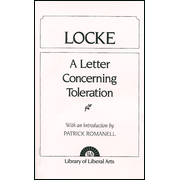
The principal mark of a great book is that it can be read and understood without exploring its specific historical circumstances. Still, ideas have a natural history as well as a dialetical timelessness. We should, therefore, learn something from the attempt to fit a man's book into his own life and his own age. This is particulary the case with A Letter Concerning Toleration. For here John Locke is not only revealing his own mind; he is at the same time reacting against the sectarian climate of opinion prevailing in his day together with its attendant waves of religious persecution. Thus the Letter turns out to be an important document fot the historian of seventeenth-century England. In fact, it may be regarded as the theoretical counterpart of the Toleration Act of 1689, the religious by-product of the 'Glorious Revolution,' of which Locke was to become explicit apologist the year following in Two Treaties of Government. A few details about the origins and career of the Letter should be suggestive of the trials and tribulations of seventeenth-century British life.
|