|
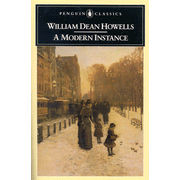
The puiblication in 1882 of A Modern Instance marked William Dean Howell's transition from magazine editor and author of some mildly recieved comedies of manners to leading American novelist and champion of realism in American literature. The story of Bartley Hubbard, a philandering, dishonest Boston journalist, and Marcia Gaylord, the wife who divorces him, is the first serious treatment of divorce in American literature. Although Howells had considered writing the novel for years, the actual compostion of it brought forth another theme besides that of divorce - that of new journalism. Yet these two innovative and powerful themes are no more than vehicles for Howell's real achievment - the perceptive delineation of contemporary American character, conditions in American culture, and the acute dislocations in ethical sensibility that fray the social fabric. In his broad and thorough introduction Edwin H. Cady examines the germination of A Modern Instance, its irony and masterly characterizations, and its roots in Howell's concern with the question of what makes an American.
|